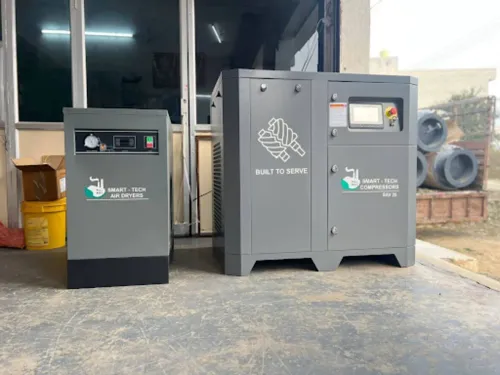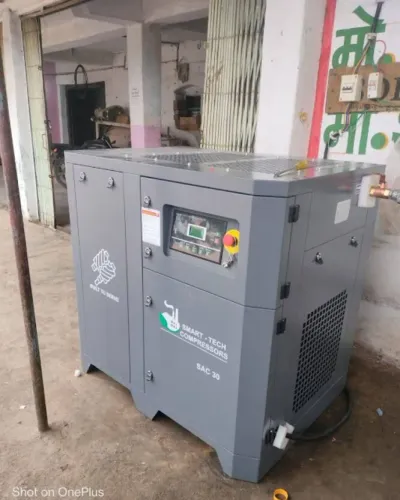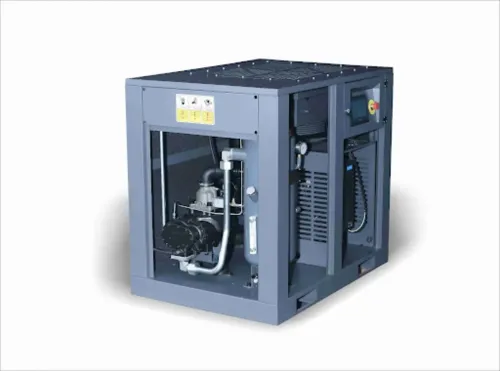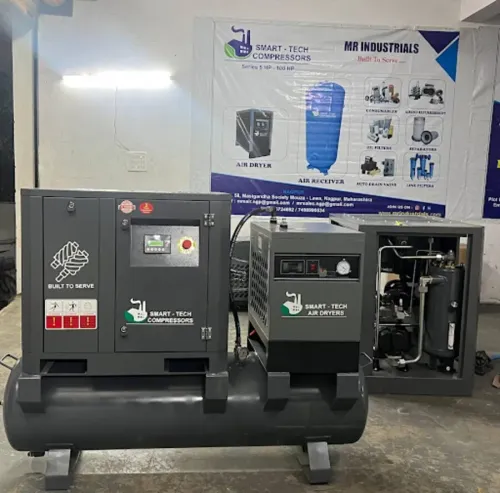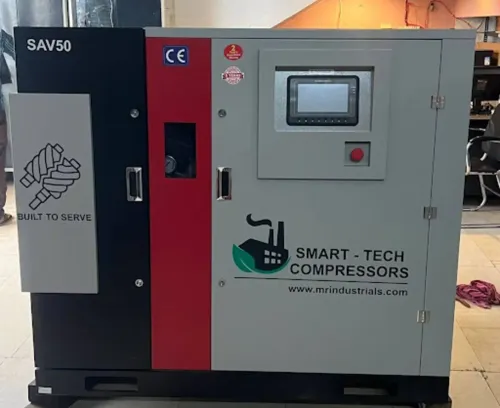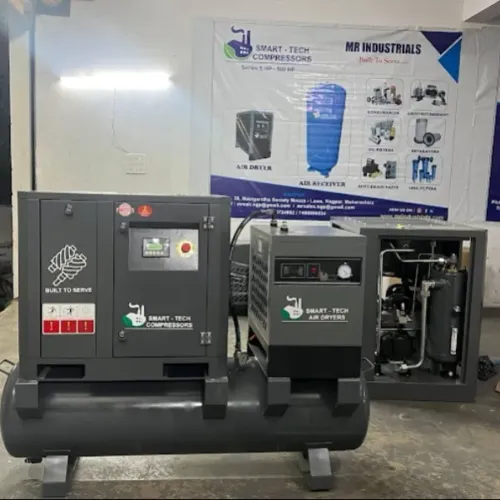
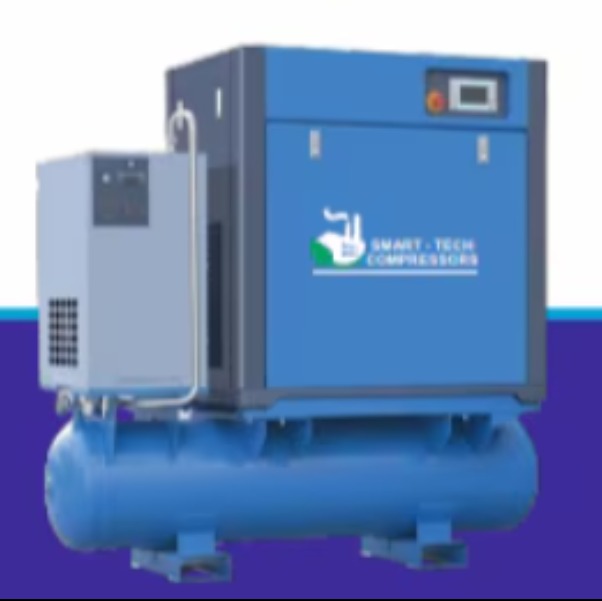
Compressed air systems are available in several configurations, and each has applications where it makes practical sense. An Oil Injected Screw Air Compressor is widely used for general industrial compressed-air duties because the injected oil supports lubrication, sealing and cooling within the compression process.
For factories, engineering businesses and workshops in Nagpur, Maharashtra, understanding where this compressor technology fits can help prevent inappropriate equipment selection.
How Oil Injected Screw Compression Works
In a rotary screw compressor, air is compressed between rotating screw elements.
In an oil-injected design, specially specified lubricant is introduced into the compression chamber. It helps lubricate moving components, assists sealing between internal clearances and absorbs heat generated during compression.
After compression, the oil is separated from the air and circulated back through the system.
This design is widely applied where reliable continuous compressed air is required and the downstream process is compatible with appropriately treated air from an oil-injected system.
Applications That Commonly Use This Technology
Oil-injected screw compressors can be found in:
- Engineering workshops
- General manufacturing
- Fabrication facilities
- Packaging operations
- Pneumatic machinery
- Automobile component plants
- Material-handling systems
The final choice should still be based on process-specific air quality requirements.
Air Treatment Remains Important
The compressor package alone does not determine the condition of air reaching production equipment.
Depending on the application, downstream filtration and drying may be required to control moisture, particles and oil aerosols.
Where air quality is especially critical, businesses should establish the required compressed-air specification before selecting the compressor and treatment system.
Maintenance Has a Direct Role in Reliability
An oil-injected compressor requires periodic maintenance of the lubricant circuit and associated components.
Service requirements can include oil changes, oil filters, air filters and separator elements according to equipment recommendations.
Cooling surfaces should also remain clean because excessive operating temperature can affect lubricant condition and compressor reliability.
Warning Signs Should Not Be Ignored
Operators should pay attention to changes such as:
- Increasing discharge temperature
- Abnormal noise
- Reduced air delivery
- Frequent alarms
- Excessive oil consumption
- Unexpected pressure changes
Repeatedly resetting an alarm without diagnosing its cause can turn a manageable issue into a more serious failure.
Commissioning Checks Support Long-Term Operation
Before startup, verify electrical supply, ventilation, piping, drains and downstream equipment.
After commissioning, record normal pressure and temperature values. These baseline readings provide useful reference points during future maintenance.
MR Industrials supports compressed air requirements for industrial users in Nagpur, including compressor equipment, parts, servicing and airend-related requirements.
Frequently Asked Questions
Can an oil-injected compressor run continuously
Rotary screw compressors are commonly used for sustained industrial operation, subject to proper sizing, installation and manufacturer operating limits.
Does the compressed air contain oil
Oil-injected compression requires separation and downstream treatment. The acceptable residual level depends on the application and required air-quality specification.
Why is the separator important
It helps separate injected lubricant from the compressed-air stream and supports proper oil circulation within the compressor system.
An Oil Injected Screw Air Compressor can be a practical industrial solution when its operating characteristics align with the process, air-quality requirements and maintenance capability of the facility.
Keywords