A cement plant compressor must deliver the required air through dust, heat, pressure losses and changing production loads without becoming an oversized source of wasted power. By the end, you will have a method for mapping demand, calculating FAD, setting the pressure and filtration specification, and comparing installations for reliable operation.
Key takeaways
- Map every air user before sizing the compressor.
- Compare suppliers using FAD at stated pressure and temperature.
- Add pipe, dryer, filter, and elevation losses to the pressure budget.
- Specify dust protection, duty cycle, controls, and service access.
Map every compressed-air user before choosing compressor capacity
A defensible compressor flow starts with a cement plant air-demand map, not connected pipe sizes or equipment nameplates. Walk the plant and record each user’s required pressure, FAD or consumption rate, operating hours, and control pattern.
- Map kiln and raw-mill instrumentation, pneumatic conveying, bin aeration, bag filters, pulse-jet cleaning, packing machines, truck loading and maintenance tools.
- Separate steady base load from short peaks such as conveying cycles, filter pulses and actuator movement. Apply a simultaneous-use factor; record it clearly, including any worksheet field labelled “simultaneous-use factorets?”
- Add measured leakage from a production-time leak survey, then reserve capacity for planned expansion. Do not use average flow alone: it misses short pressure-dropping peaks. Do not add every device’s maximum: that oversizes the compressor for an impossible operating condition.
- State the result in Nm³/min or CFM, with reference temperature, pressure and humidity. Confirm that every supplier uses the same basis.
Use this comparison to challenge the demand total:
| User group | Demand pattern | What to calculate |
|---|---|---|
| Instrumentation | Low, steady, regulated | Concurrent FAD at required pressure |
| Conveying and aeration | Cyclic or sustained peaks | Cycle rate, duration and simultaneous operation |
| Filters, packing and loading | Intermittent peaks | Peak FAD and overlap |
| Maintenance tools and leaks | Variable background load | Hours used and measured leakage |
Size the receiver for peak buffering, not chronic undersizing: V = t × Q × P_atm ÷ (P_high − P_low). Check the result against load/unload or VSD controls, allowable pressure swing and cycling frequency.
Compare compressor capacity using FAD, not horsepower or inlet volume
The fair comparison is free air delivery (FAD) at the required discharge pressure and identical reference inlet conditions. Require inlet temperature, inlet pressure and humidity, plus the test basis, such as ISO 1217 for rotary compressors.
| Figure | What it means | Why it matters |
|---|---|---|
| FAD | Delivered free air referenced to stated conditions | Compares useful output |
| Inlet volume | Air volume entering the air end | Does not prove delivered flow |
| Motor nameplate horsepower | Motor’s rated electrical output | A larger motor does not prove greater FAD |
Do not compare one supplier’s nominal air-end capacity with another supplier’s FAD. Ask every supplier for performance at the same pressure and reference conditions.
Raising discharge pressure usually increases power consumption while reducing the compressor’s delivered FAD. Request the performance curve at each proposed pressure; a higher-pressure rating can leave less usable air and higher energy cost.
Match the machine to the hourly load profile, including night, weekend and shutdown demand. A VSD saves energy when demand stays within its efficient turndown range, but low demand can drive it to minimum speed, unloading or stopping. Fixed-speed equipment may suit a stable base load.
For multiple compressors, specify receiver-pressure control and coordinated sequencing:
- Assign separate machines to base-load, intermittent-peak and standby duty.
- Prevent independent compressors from chasing small pressure fluctuations.
- Provide N+1 capacity when losing the largest running compressor could stop a kiln or create a safety risk.
A controller should shed nonessential loads before essential instrument air is lost.
Build the plant pressure budget from the furthest air user
The compressor discharge pressure equals the minimum pressure at the furthest or highest-demand user plus every pressure loss between them. Build the pressure budget from that user: add ring main pressure loss, branch piping, valves, hoses, point-of-use regulators, aftercooler, dryer and filters.
Check losses at peak flow and with filters at end-of-life loading, not with clean elements.
Keep conveying-line and equipment pressure requirements separate from instrument-air requirements. Raising the entire header to satisfy one high-pressure machine increases energy use; compare a local booster or regulator before selecting a higher compressor pressure.
- Use a refrigerated dryer when a pressure dew point around +3 °C protects the distribution system.
- Use a desiccant dryer when outdoor equipment or exposed pipework requires a subzero pressure dew point.
- Rate the dryer at worst-case inlet temperature, ambient temperature, flow and pressure; a nominal rating can fail during hot kiln-area operation.
- Specify ISO 8573-1 particle, water and oil classes for each end use, with the measurement location named, such as the instrument-air outlet or conveying-machine inlet.
Install demand-controlled or zero-loss drains at receivers, dryers and filters. Give each drain an isolation valve, strainer where dirt is expected, service access and visible or monitored fault indication; a blocked drain can flood the dryer, while a failed-open timed drain wastes compressed air. Ensure discharge piping cannot freeze or become blocked.
Protect the compressor from cement dust and hot-room conditions
Place the intake in the cleanest available location, away from crushers, mills, packing lines, transfer points and kiln exhaust paths. A weather-protected remote compressor intake is preferable when that location has lower clinker, limestone or fly-ash loading.
Specify cement dust intake protection with pre-filtration suited to abrasive dust, a filter differential pressure indicator or transmitter, a high-pressure-drop alarm and accessible filter service.
Dust loads the filter, increases restriction, fouls the air/oil cooler, raises operating temperature and can reduce delivered flow. A downstream coalescing filter treats compressed-air contamination; it does not protect the compressor from abrasive ambient dust. Clean or replace filters from measured loading and differential pressure, not an arbitrary calendar interval.
| Installation | What it means | When it applies |
|---|---|---|
| Standard compressor room | Simple intake and room cooling; requires strong housekeeping, short clean-air paths and controlled heat | Only when the room is separated from dusty process equipment |
| Sealed, filtered enclosure | Enclosed equipment with controlled make-up air and maintainable filtration | When ambient dust is unavoidable near the compressor |
| Remote compressor intake | Ducted, weather-protected intake from a cleaner location | When the room or process area is dusty or hot |
Discharge cooling air outdoors or into a low-pressure area so it cannot recirculate. Check intake temperature, solar and kiln heat, altitude and cooling capacity against the supplier’s limits and derating method.
Keep housekeeping, local exhaust ventilation and crystalline-silica exposure controls as separate process safeguards. Compressor filtration does not control dust at crushers, mills or transfer points.
Turn the selection into a duty-cycle and service specification
Make the purchase specification follow the compressor duty cycle, not the largest nameplate. Assign one rotary screw compressor to continuous base load, sized for essential demand; add peak-load support for short conveying or packing surges; and define standby as N+1 redundancy, keeping essential production supplied after the largest running unit fails.
Shed maintenance tools, noncritical conveying and pulse-jet cleaning first during an outage.
| Equipment | Best fit | Production risk to check |
|---|---|---|
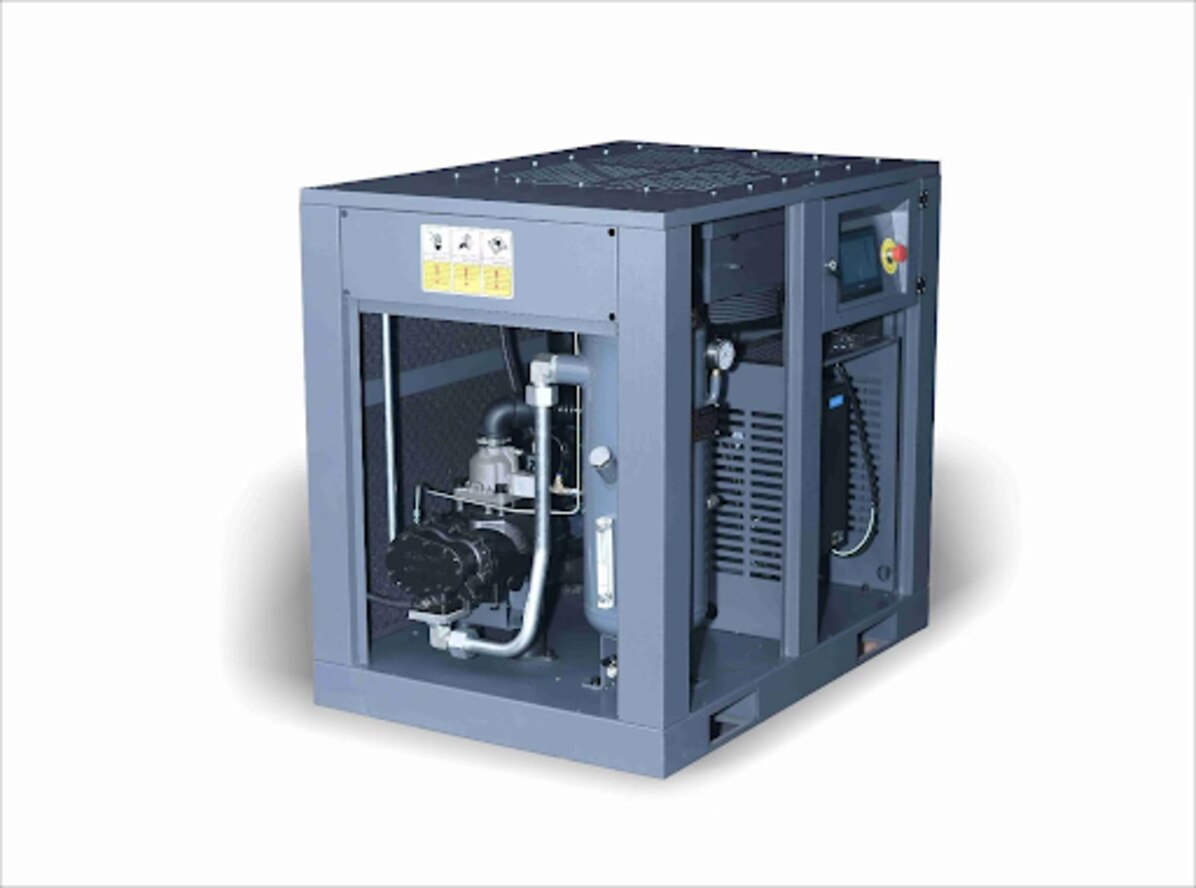
| Rotary screw | Continuous plant air | Cooling, dust filtration, oil service and minimum-load control |
| Reciprocating | Intermittent, smaller auxiliary duty | Pulsation, vibration, receiver cycling and higher maintenance at continuous duty |
Write these values into the purchase specification:
- FAD in Nm³/min or CFM at the stated discharge pressure, inlet temperature, inlet pressure, humidity and ISO 1217 test basis; never substitute inlet volume or motor horsepower.
- Maximum and minimum compressor-room temperature, intake limits, allowable pressure drop, and a supplier calculation for hot compressor room derating at the measured Nagpur site temperature.
- Receiver volume, sequencing by receiver pressure, and lead/lag rotation that prevents compressors from chasing small fluctuations.
- Dryer type: refrigerated for about +3 °C pressure dew point, desiccant for subzero service; state ISO 8573-1 particle, water and oil classes at each user, filter differential-pressure alarm and high-pressure alarm points, and automatic or zero-loss drains with isolation.
- Require air compressor commissioning at representative production load, recording pressure at the compressor, receiver and furthest user. Repair leaks, then repeat the survey during normal production; artificial base load can otherwise trigger an unnecessary compressor purchase.
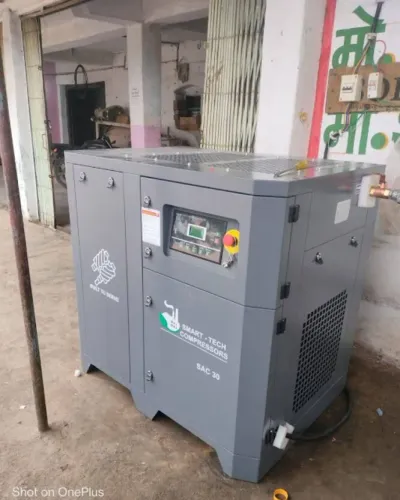
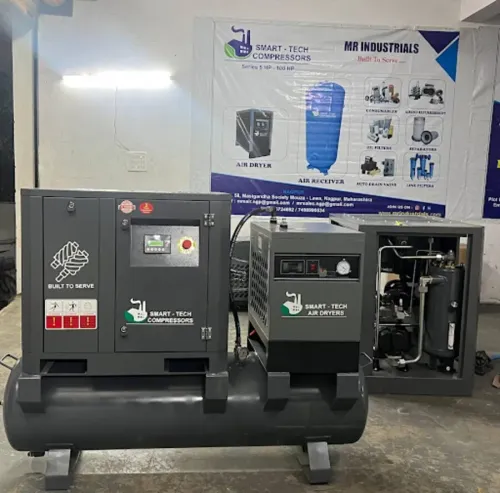
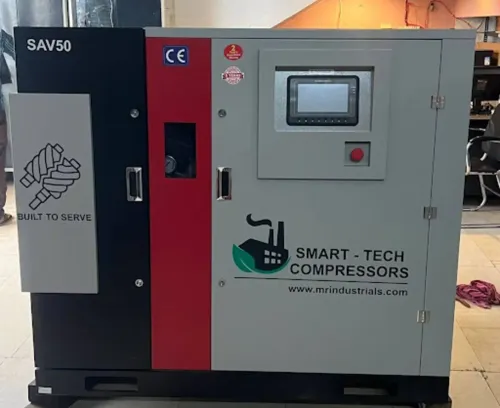
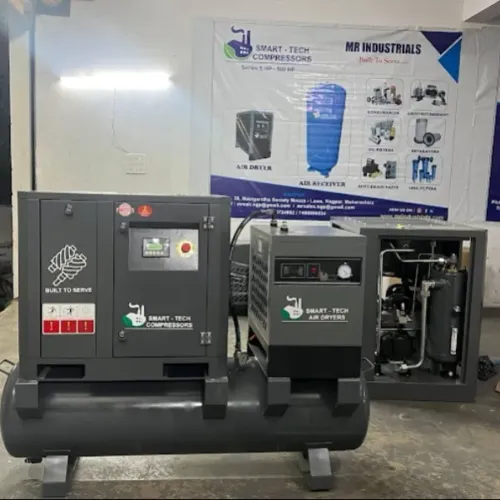
SMART - TECH COMPRESSORS belongs in comparisons that test local installation and service against this specification, not horsepower alone.
Related products
 | Rotary Screw Air Compressor Smart -Tech Compressors Upto 300 HP We brought Special customised machine for customers , very cost effective and breakdown free , long life with energy saving and low maintenance... |
 | Rotary Screw Air Compressor SMART -TECH MAKE 25 HP VFD COMPRESSOR ₹380000 Smart -Tech compressors braught a customised machine for customers very good in Quality , low cost , energy saving , low maintenance cost , fast... |
Frequently asked questions
How do you calculate compressor capacity for a cement plant?
List every compressed-air user, record each user’s FAD or consumption rate and operating pattern, then combine simultaneous demand with an explicit allowance for leakage and future capacity. Compare compressors using FAD rather than horsepower or inlet volume.
Why should cement plants compare FAD instead of compressor horsepower?
FAD states the usable air delivered under defined inlet and discharge conditions. Horsepower describes motor size, while inlet volume does not account for compression losses, temperature, pressure, or delivered-air performance.
How do you determine the pressure required from a cement plant compressor?
Start with the pressure required at the furthest air user, then add losses through piping, bends, valves, filters, dryers, separators, and elevation. Check the pressure at peak flow, not only when the plant is idle.
How should you protect a compressor from cement dust and heat?
Use a clean, adequately sized intake location, staged filtration, sealed electrical equipment where required, ventilation, and temperature monitoring. Keep filters accessible and prevent hot discharge air from recirculating into the compressor room.
What should a cement plant compressor specification include?
State required FAD, working pressure, duty cycle, control method, air quality, ambient temperature, dust conditions, receiver size, dryer and filter requirements, redundancy, service intervals, spare parts, and access for maintenance.
Related products
 | Rotary Screw Air Compressor Smart -Tech Make 30 HP Fix Speed Compressor ₹310000 Smart -Tech compressors braught a customised machine for customers very good in Quality , low cost , energy saving , low maintenance cost , fast... |
 | Rotary Screw Air Compressors braught a customised machine for customers very good in Quality , low cost , energy saving , low maintenance cost , fast service availability , and 5... View product → |
 | Rotary Screw Air Compressor 50HP SMART -TECH VFD COMPRESSOR PREMIUM MODEL PREMIUM RANGE ROTARY SCREW AIR COMPRESSOR 50HP VFD MODEL WITH VERY AFFORDABLE PRICE AND MORE WARRANTY THAN ANY BRAND |