Compressed-air costs rise when a compressor runs at excessive pressure, unloads for long periods, supplies more flow than production needs, or compensates for leaks and restricted piping. By the end, you will be able to measure demand, compare fixed-speed and VFD operation, identify system losses, and specify a compressor package using operating data rather than motor horsepower alone.
Key takeaways
- Use continuous screw compression to reduce pressure swings and avoid unnecessary cycling.
- Choose fixed speed for steady demand and VFD control for changing demand.
- Size compressor capacity from measured demand, not connected equipment ratings.
- Check leaks, pressure drops, set points, and air treatment losses before upgrading.
How continuous screw compression reduces avoidable energy use
A rotary screw compressor supports lower energy use by delivering a steady air stream instead of repeatedly starting and stopping. This continuous compression reduces pressure pulsations, making it easier to maintain usable pressure without inflating the receiver or compressor set point.
Stable delivery also helps pneumatic equipment operate consistently, rather than demanding extra air after each pressure dip.
The main energy advantages during normal operation are:
- Continuous compression keeps the compressor near an efficient operating condition when plant demand is steady.
- Load unload control reduces full-load operation when demand falls, although an unloaded fixed-speed machine still consumes power; do not leave it idling for long periods.
- Correct operating pressure prevents the compressor from making air at a higher pressure than the tools and process require. A 2 psi increase is commonly estimated to add about 1% to compressor energy, though the actual penalty depends on compressor type and controls.
- Leak repair removes artificial demand. A leak forces the compressor to produce air that performs no useful work, and the loss grows with pressure and operating hours.
- Clean oil filters, separators, coolers, and drains preserve airflow and limit pressure drop. Fouling raises discharge temperature and forces the package to work harder.
For genuine screw air compressor energy efficiency, compare measured specific power in kW per 100 cfm or kW per m³/min at the required pressure and flow. Motor efficiency alone does not describe the complete compressor package.
When fixed-speed or VFD operation is the better choice
A VFD compressor saves energy when air demand changes substantially across shifts, production stages, or operating hours. Its variable-frequency drive slows the motor during lower demand instead of repeatedly loading and unloading at full speed.
| Option | Energy advantage | Better fit | Main limitation |
|---|---|---|---|
| fixed-speed screw compressor | Lower specific power near full load | Steady demand close to rated capacity | Unloaded running wastes power during low demand |
| VFD compressor | Better part-load efficiency across a changing demand profile | Variable flow, frequent shifts, or fluctuating production | Drive losses and minimum-speed power reduce savings at very low demand |
At steady, near-full-load demand, a fixed-speed screw compressor can perform better because its package has no drive-electronics losses and may deliver lower kW per m³/min. Compare measured specific power at the required pressure rather than comparing motor nameplate efficiency; ISO 1217 provides the acceptance-test framework for this comparison.
A VFD does not make an oversized compressor efficient. Below its effective turndown range, it still consumes power at minimum speed, and cycling between low demand and shutdown can erase the benefit. A sequence of correctly sized fixed-speed and VFD machines can outperform one large VFD unit.
Calculate the decision from a logged load profile showing flow, pressure, and operating hours. Include the purchase premium, maintenance, and auxiliary power, then verify that the controller manages the complete compressor room rather than displaying one machine’s data.
How to match compressor capacity to measured plant demand
Choose compressor capacity from measured flow and pressure, not from a 25 HP, 30 HP, or 50 HP label. Record the plant’s compressed-air demand in m³/min or CFM across a full production cycle, including the lowest load, normal load, and highest short-term peak.
| Selection basis | What it tells you | Risk or benefit |
|---|---|---|
| Horsepower alone | Motor size only | It does not show delivered flow, package efficiency, or pressure performance |
| Measured flow and pressure | Required output at the actual operating point | It supports a correctly sized compressor and control strategy |
| Measured specific power | Energy used to produce flow | Compare kW per 100 CFM or kW per m³/min at the required pressure |
Measure bar and psi pressure at the point of use, then compare it with compressor discharge pressure. The difference reveals losses through dryers, filters, receivers, piping, hoses, and regulators; raising compressor pressure to hide those losses increases energy use.
Use a pressure and flow logger to capture shift patterns, simultaneous equipment use, and short peaks. Check the required pressure for each end use rather than applying one high setpoint to the entire plant.
Allow for confirmed future expansion, but do not add a large blanket margin. A receiver can absorb brief peaks and reduce cycling; it cannot correct a chronic flow deficit. Compare candidate packages using measured specific power at the required pressure, inlet condition, and operating state, using ISO 1217 test data where available.
An ISO 11011-style system assessment helps separate genuine capacity needs from leakage, poor sequencing, or demand-side waste.
Which system losses can erase compressor energy savings
Pressure drop and compressed-air leaks can erase compressor savings even when the screw compressor runs efficiently. Measure pressure at the point of use, not only at discharge; losses can occur across aftercoolers, separators, dryers, filters, the air receiver, hoses and regulators.
Raising pressure to overcome clogged filters, undersized piping or leaks increases energy use; a 2 psi increase commonly adds about 1% compressor energy.
Check these less visible losses:
- Refrigerated and desiccant dryers consume energy. Purge-regenerated desiccant dryers also waste compressed air unless purge control, dew-point-based regeneration, blower assistance or heat-of-compression regeneration suits the required pressure dew point.
- Select water, particle and oil treatment by end use under ISO 8573-1. A lower pressure-dew-point class than the process needs adds operating cost.
- Test automatic drains. A failed-open drain continuously discharges compressed air; a failed-closed drain sends water into filters and equipment.
- Clean oil filters, separators and coolers on oil-injected compressors. Fouling raises differential pressure and operating temperature.
- Inspect end-use equipment. Open blow-off guns, oversized nozzles and air used for cooling or sweeping often consume more flow than the process requires.
| Component | Energy consequence | Practical check |
|---|---|---|
| Air receiver | Stabilises demand but adds losses if poorly drained or undersized | Check pressure cycling and drain operation |
| Filters | Blockage creates pressure drop | Record differential pressure |
| End-use equipment | Inefficient nozzles waste flow | Measure flow and replace with engineered devices |
How to verify performance before and after installation
A nameplate motor rating does not prove an efficient installation. Establish a production baseline under normal shifts, then compare the installed package at the same pressure, flow, inlet conditions, and load profile.
1. Complete a compressed-air audit checklist using ISO 11011 boundaries: compressor supply, dryers, receivers, distribution, leaks, and end-use equipment. Record kW, delivered flow in m³/min or CFM, discharge pressure, point-of-use pressure, and operating hours.
2. Require supplier acceptance data aligned with ISO 1217. Compare specific power in kW per 100 cfm or kW per m³/min at your required pressure and operating state, not motor efficiency alone.
3. Measure pressure before and after the aftercooler, separator, dryer, filters, receiver, main piping, and point-of-use regulator. A large pressure gap identifies restriction or maintenance work rather than a need for a larger compressor.
4. Repeat the baseline after commissioning during comparable production. Check kW, flow, pressure stability, unloaded hours, and specific power; document the readings, instruments, calibration dates, and test conditions in the handover file.
5. Inspect oil-injected machines at acceptance and during follow-up: separator differential pressure, cooler cleanliness, oil condition, oil-filter condition, and drain performance. These readings expose rising energy use before a breakdown.
Ask SMART - TECH COMPRESSORS to state the guaranteed test conditions, measured flow, specific power, control settings, and warranty exclusions in the quotation. Also verify that the selected ISO 8573-1 pressure-dew-point class matches the process instead of forcing expensive dry air throughout the plant.
Related products
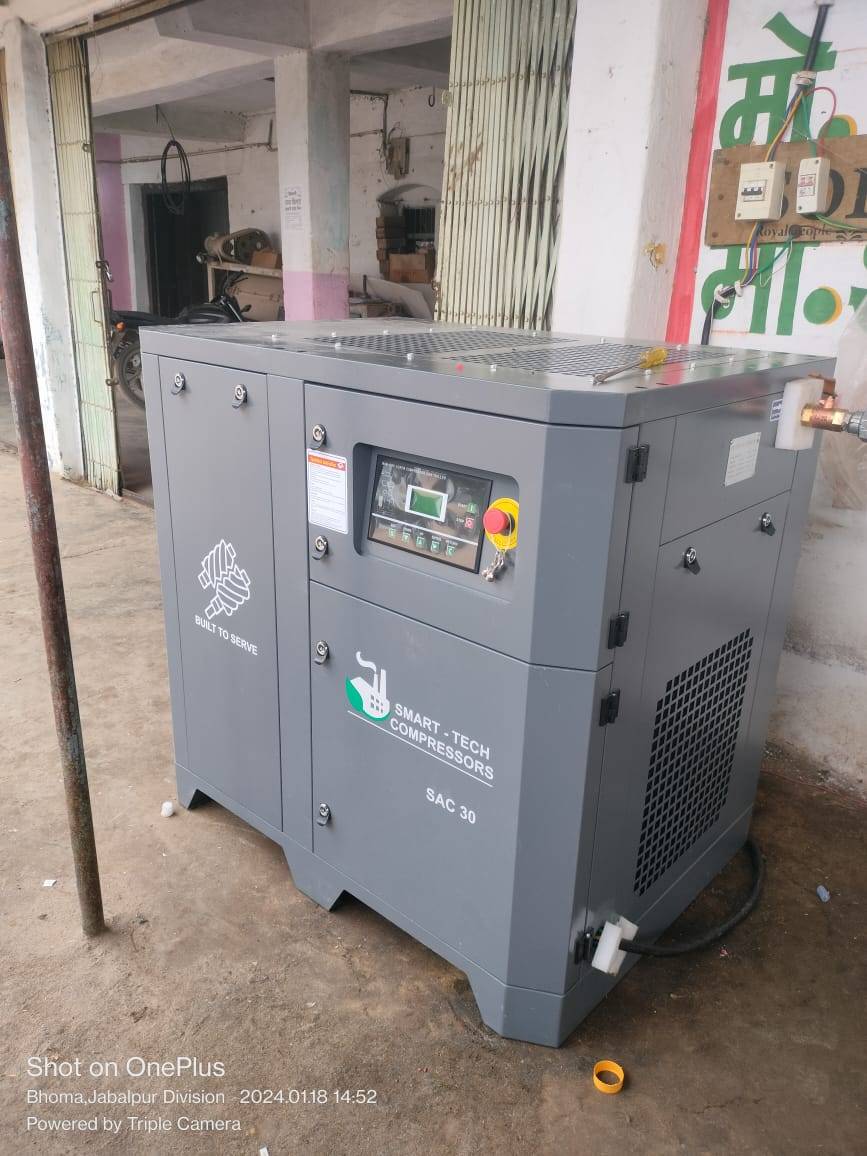 | Rotary Screw Air Compressor Smart -Tech Make 30 HP Fix Speed Compressor ₹310000 Smart -Tech compressors braught a customised machine for customers very good in Quality , low cost , energy saving , low maintenance cost , fast... |
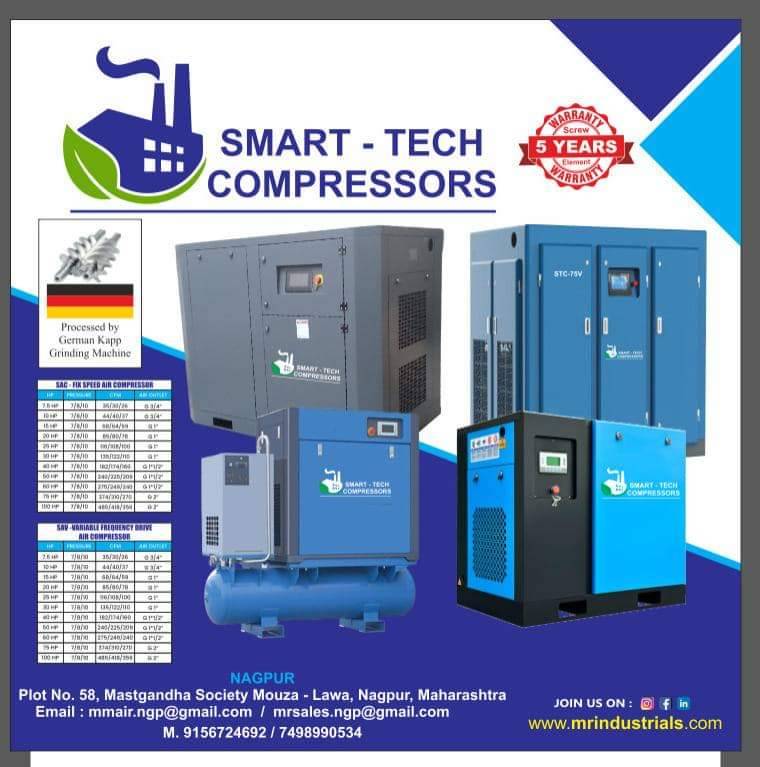 | Rotary Screw Air Compressor Smart -Tech Compressors Upto 300 HP We brought Special customised machine for customers , very cost effective and breakdown free , long life with energy saving and low maintenance... |
Frequently asked questions
How does continuous screw compression reduce avoidable energy use?
A rotary screw compressor delivers a steady air stream, reducing pressure pulsations and the need for excessive receiver or compressor set points.
When should you choose a fixed-speed or VFD compressor?
Choose fixed speed for stable, continuous demand. Choose variable frequency drive operation when plant demand changes substantially over time.
How do you match compressor capacity to measured plant demand?
Measure actual flow and pressure across operating shifts, then size capacity around the plant’s demand profile rather than installed equipment ratings.
Which system losses can erase compressor energy savings?
Air leaks, pressure drops, excessive pressure settings, poorly sized piping, and inefficient dryers or drains can offset compressor energy savings.
How do you verify compressor performance after installation?
Compare measured power, flow, pressure, operating hours, and unload time before and after installation under comparable production conditions.
Related products
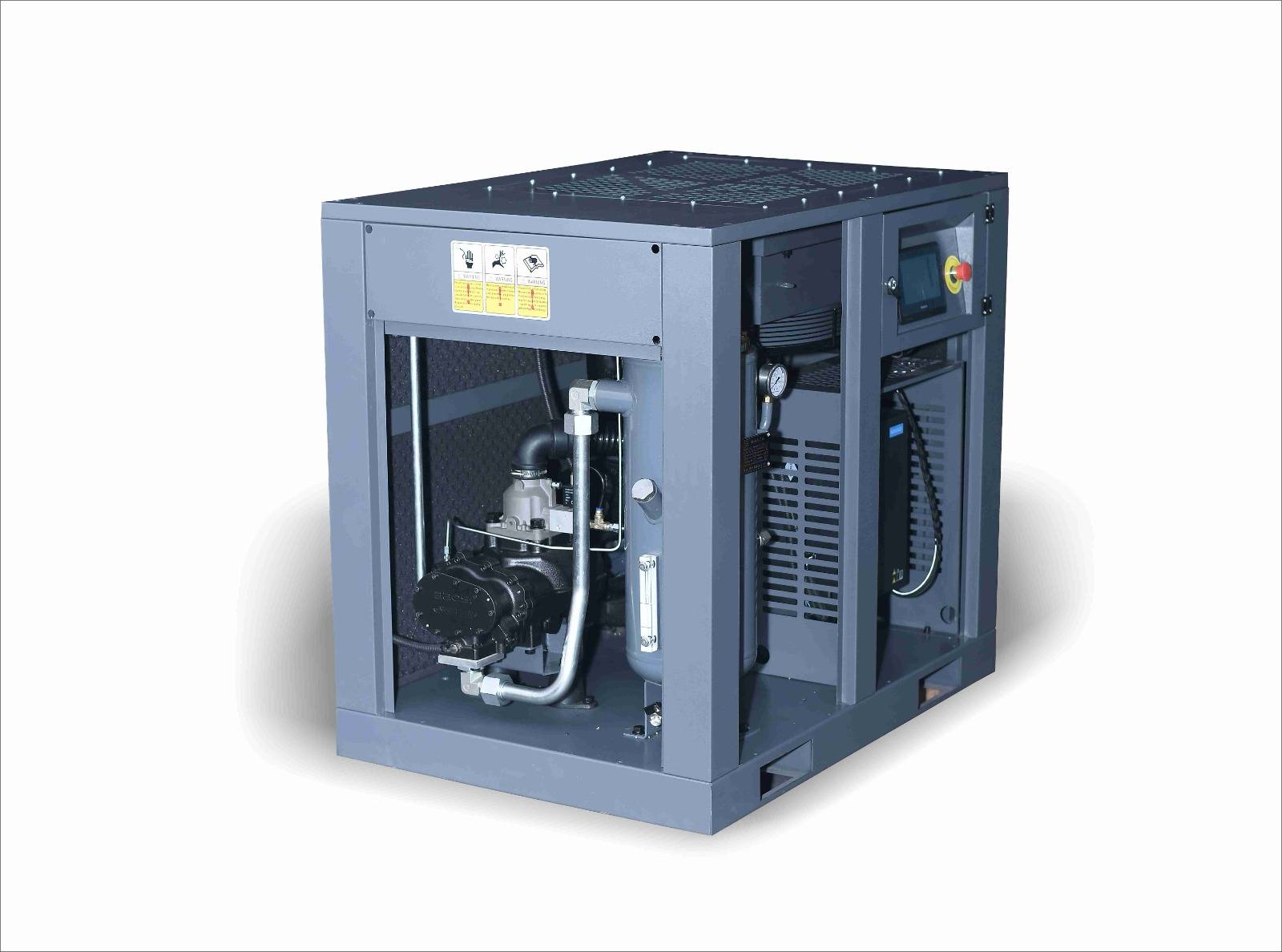 | Rotary Screw Air Compressors braught a customised machine for customers very good in Quality , low cost , energy saving , low maintenance cost , fast service availability , and 5... View product → |
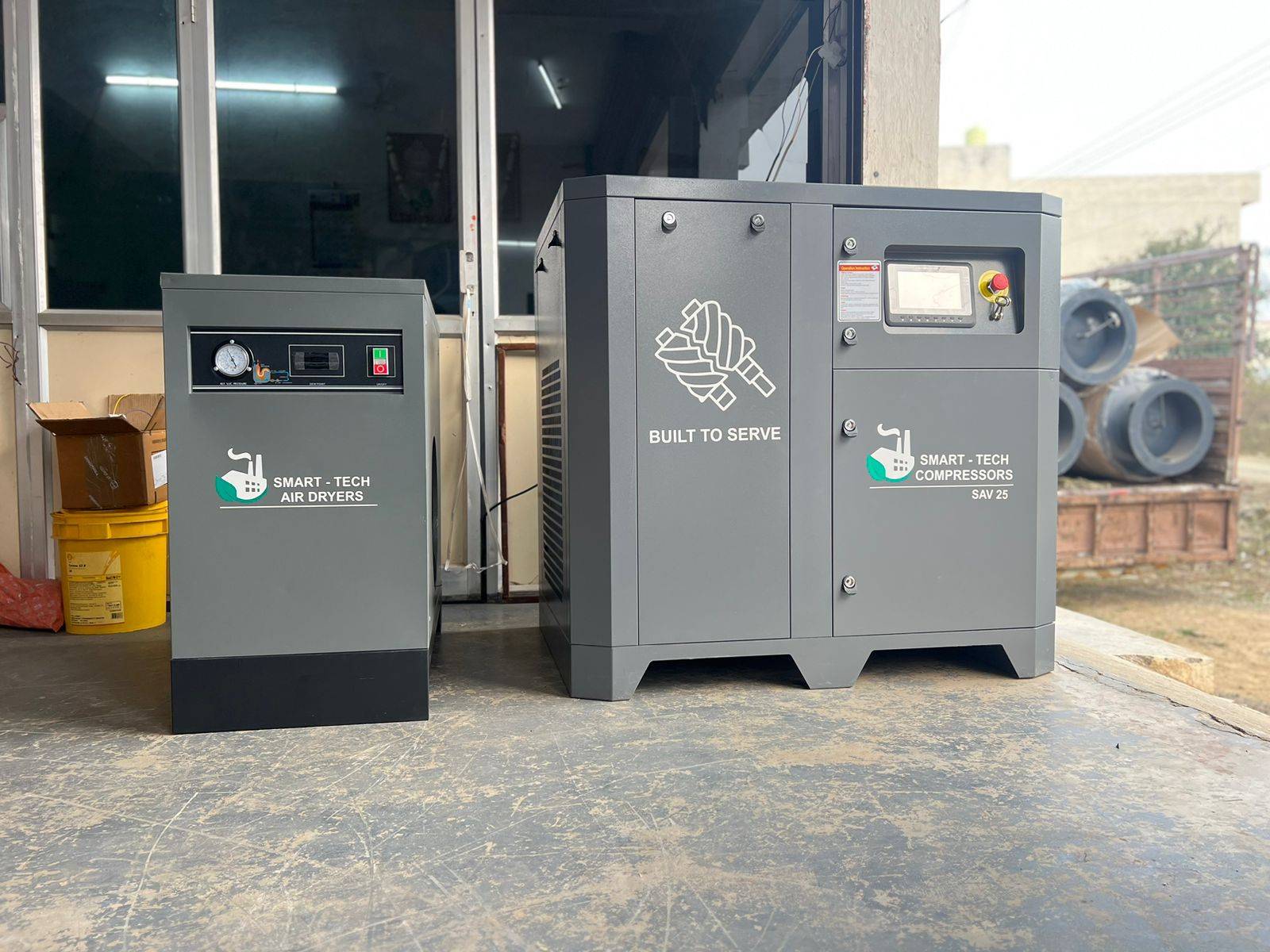 | Rotary Screw Air Compressor SMART -TECH MAKE 25 HP VFD COMPRESSOR ₹380000 Smart -Tech compressors braught a customised machine for customers very good in Quality , low cost , energy saving , low maintenance cost , fast... |
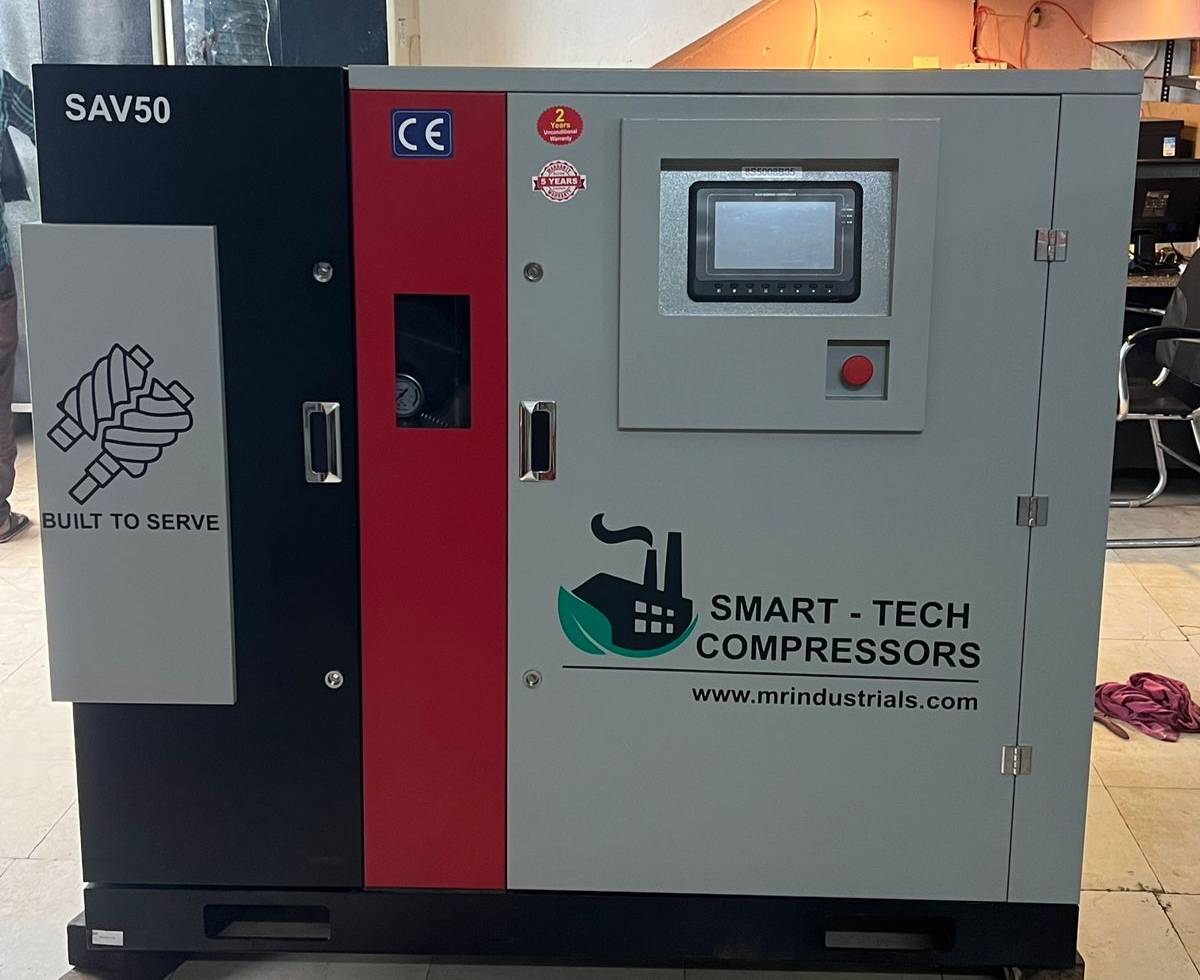 | Rotary Screw Air Compressor 50HP SMART -TECH VFD COMPRESSOR PREMIUM MODEL PREMIUM RANGE ROTARY SCREW AIR COMPRESSOR 50HP VFD MODEL WITH VERY AFFORDABLE PRICE AND MORE WARRANTY THAN ANY BRAND |