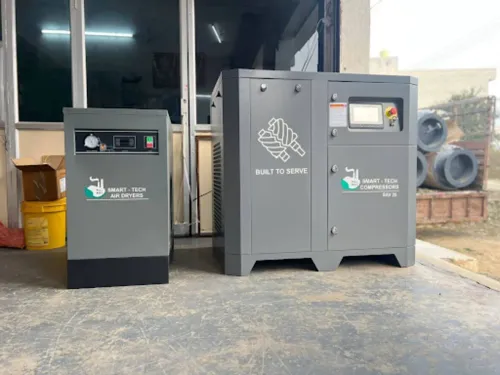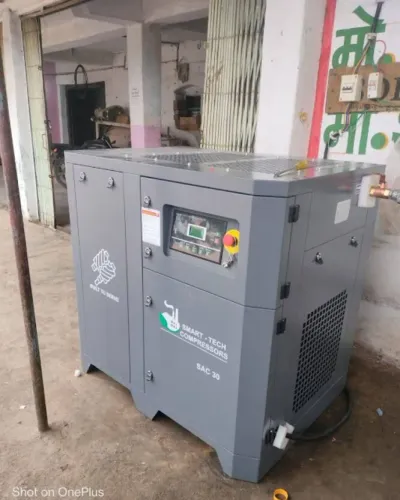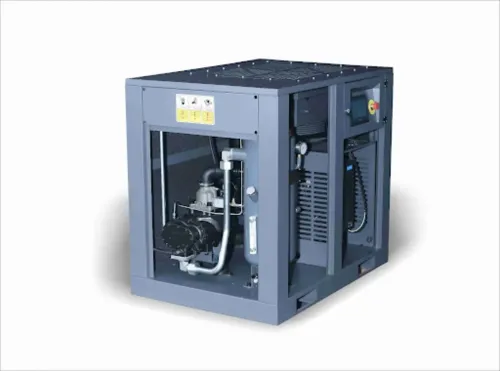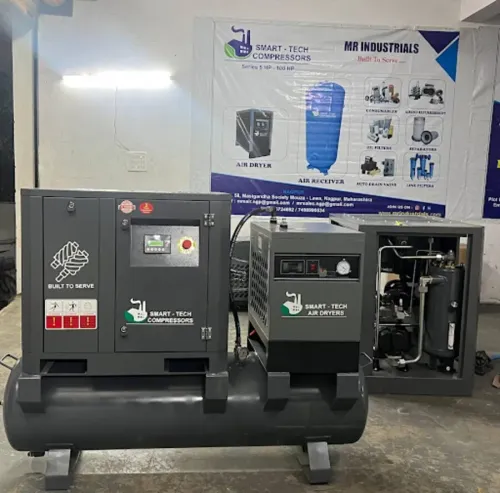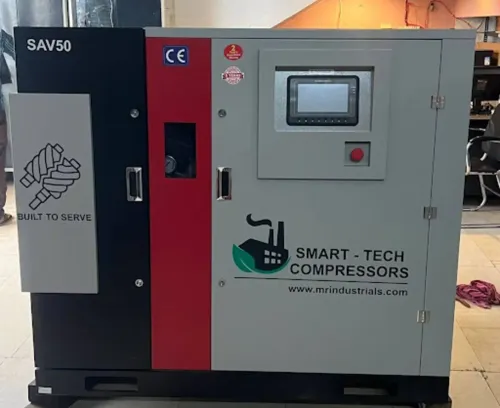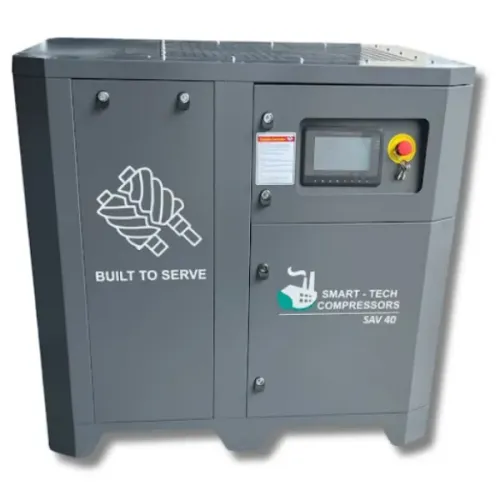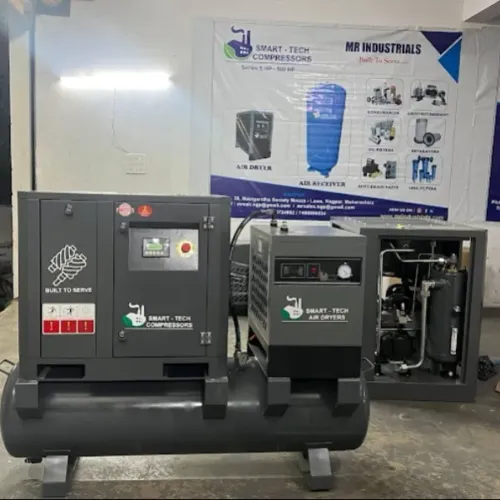
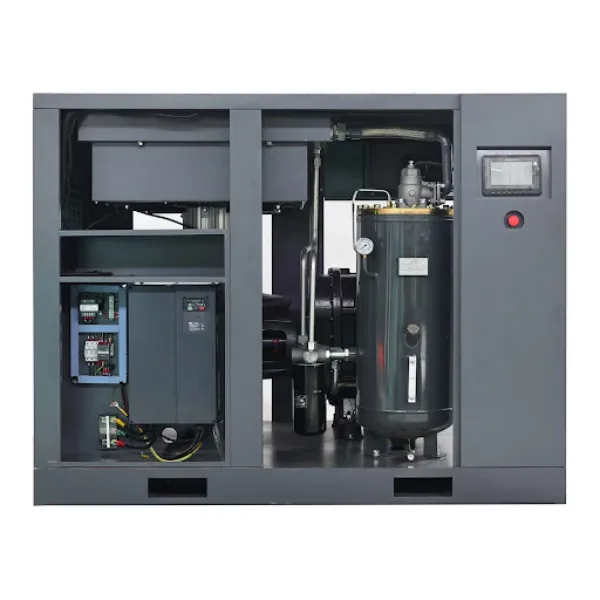
Textile manufacturing depends on compressed air at several stages of production. From spinning and weaving to pneumatic controls, cleaning and material movement, stable air pressure can directly influence machine performance and production continuity. Choosing the right Air Compressor for Textile Industry therefore requires more than comparing motor capacity or purchase price.
For textile units in Nagpur and other industrial areas of Maharashtra, the right compressed air system should match actual air demand, operating hours, pressure requirements and expected future expansion.
Where Compressed Air Is Used in Textile Manufacturing
Different textile processes can have very different air requirements. Compressed air may be required for:
- Air-jet weaving machines
- Pneumatic actuators
- Yarn handling systems
- Spinning machinery
- Automated controls
- Instrumentation
- Cleaning applications
- Packaging equipment
Air-jet looms can create particularly significant demand because compressed air is directly involved in yarn insertion. An undersized compressor may struggle to maintain pressure when multiple machines operate simultaneously.
Start With Actual Air Demand
Compressor selection should begin with an air audit rather than an assumption based only on motor horsepower.
The assessment should consider operating pressure, total airflow requirement, simultaneous machine usage, shift duration, leakage and possible production expansion. Peak demand also matters because the compressor must respond effectively when several pneumatic systems require air at the same time.
Oversizing is not automatically safer. A compressor that operates inefficiently at the plant's normal load can increase energy consumption and operating costs.
Air Quality Deserves Equal Attention
Textile manufacturing environments often contain lint, dust and airborne fibres. These conditions can affect compressor intake filters and cooling performance.
A well-planned compressed air installation may therefore include appropriate filtration, air drying and condensate management. The required air quality should be decided according to the specific production process rather than applying the same treatment to every plant.
Moisture in compressed air can also affect pneumatic components and downstream equipment. Suitable dryers and filters help maintain dependable air quality where the application requires it.
Installation Conditions Influence Performance
The compressor room should provide adequate ventilation and convenient access for routine maintenance. Excessive ambient temperature, restricted airflow and contaminated intake air can reduce system efficiency.
Piping layout also deserves attention. Incorrect pipe sizing, unnecessary bends and poorly planned distribution can create pressure drops even when the compressor itself has sufficient capacity.
Textile manufacturers should therefore evaluate the complete compressed air system rather than viewing the compressor as an isolated machine.
Maintenance Helps Protect Production Continuity
Routine inspection can identify developing problems before they lead to unplanned stoppages. Maintenance commonly includes checking filters, oil condition where applicable, coolers, belts or couplings, drains and operating parameters.
Plants should also monitor unusual temperature increases, pressure fluctuations and changes in compressor sound.
MR Industrials supports industrial compressed air requirements for businesses in Nagpur and across Maharashtra, where equipment selection needs to reflect real operating conditions rather than catalogue specifications alone.
Common Questions From Textile Manufacturers
How is compressor capacity calculated for a textile plant
Capacity should be based on total airflow demand, required operating pressure, simultaneous equipment usage, leakage allowance and reasonable future expansion.
Is a screw compressor suitable for continuous textile production
Rotary screw compressors are commonly considered for applications with sustained compressed air demand because they are designed for continuous industrial operation. Final selection should still depend on the plant's load profile.
Why does air pressure fall during production
Possible causes include insufficient compressor capacity, excessive leakage, blocked filters, undersized piping, high simultaneous demand or pressure losses within the distribution network.
A properly engineered Air Compressor for Textile Industry can support consistent production, controlled energy use and dependable pneumatic equipment operation when capacity, air quality, installation and maintenance are considered together.
Keywords